
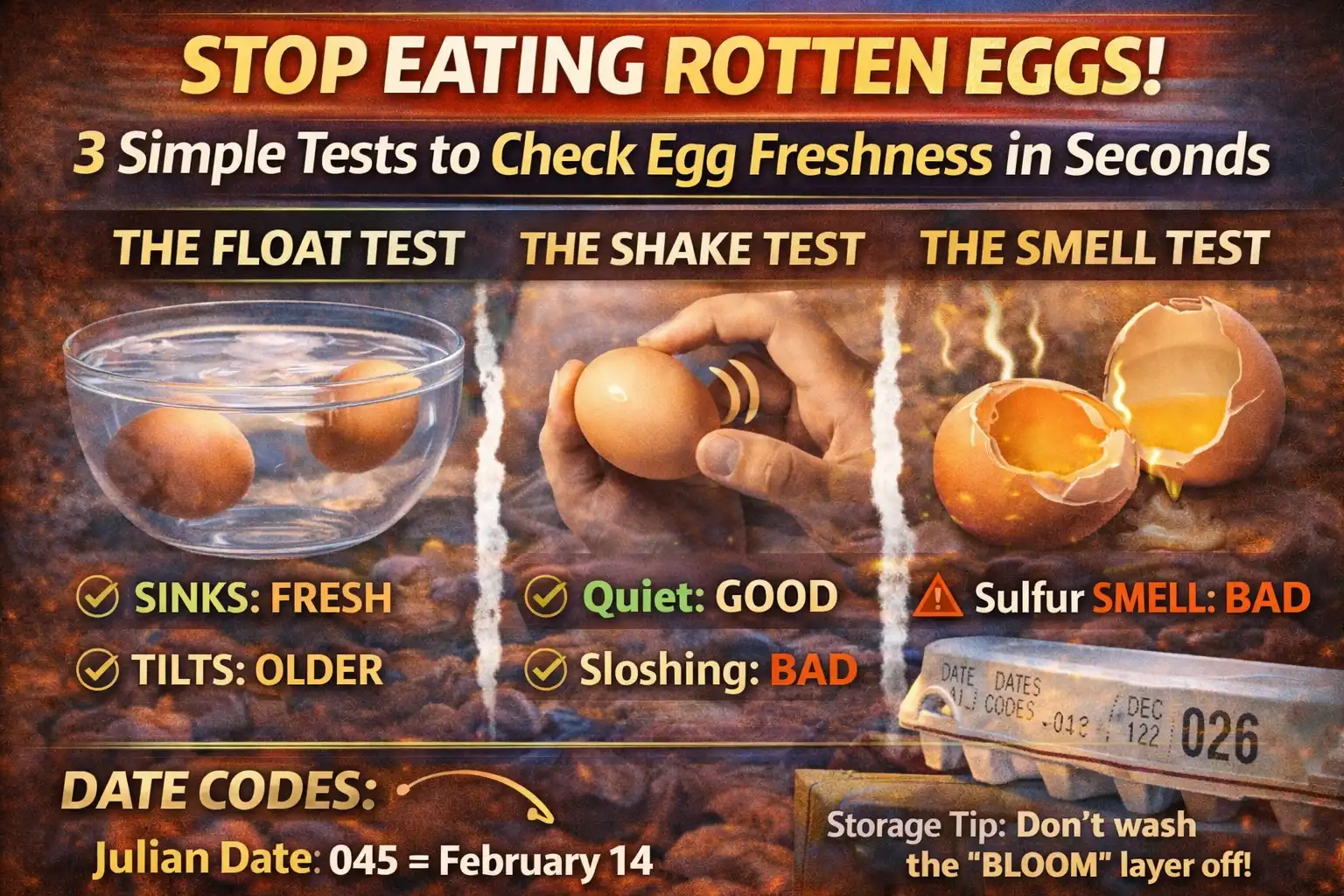
Most people pick up eggs from supermarkets or local shops without knowing how old they really are. From the outside, a bad egg often looks perfectly normal—but inside, it can cause silent food poisoning, stomach infections, and nausea.
If you want to protect your family, learning how to identify fresh eggs takes less than a minute. Here are 3 foolproof tests, plus a smart guide to carton date codes and proper storage.
Why You Should Care: The Hidden Risk of Old Eggs
Eggs slowly lose quality after laying. As they age:
- Bacteria risk increases
- Smell and taste degrade
- Protein quality drops
The danger? You may not notice anything until after eating. That’s why freshness checks matter—especially in warm climates.
Test #1: The Float Test (Most Reliable & Visual)
This is the fastest and most accurate home test.
How to do it:
- Fill a bowl with cold water
- Gently place the egg inside
What it means:
- Egg sinks and lies flat → Very fresh
- Egg sinks but stands upright/tilts → Still usable, but older
- Egg floats to the top → ❌ Throw it away
Why it works:
As eggs age, air enters through the shell, making them float.
Test #2: The Shake Test (Before Cracking)
This one works best inside the store or kitchen.
How to do it:
- Hold the egg close to your ear
- Shake gently
Result:
- No sound → Fresh
- Sloshing sound → Old egg
Liquid inside old eggs becomes watery, causing movement noise.
Test #3: The Smell Test (After Cracking)
This is your last safety check.
- Fresh eggs have almost no smell
- Rotten eggs smell like sulfur or gas instantly
If it smells even slightly bad, don’t taste it.
Understanding Egg Carton Date Codes (2026 Guide)
Many egg cartons now include date stamps, but they confuse buyers.
Common labels explained:
- Best Before / Use By: Safe quality window, not exact freshness
- Julian Date: A 3-digit number (001–365) showing the day of the year eggs were packed
- Example:
045= February 14
- Example:
👉 Lower number = packed earlier in the year
Always combine date codes with physical freshness tests.
Storage Pro-Tip: Should You Wash Eggs Before Storing?
Short answer: No.
Eggs have a natural protective coating called the “bloom” layer.
- Washing removes this barrier
- Bacteria can then enter through the shell pores
Best practice:
- Store eggs unwashed in the fridge
- Wash only just before use
This keeps eggs fresh much longer.
Final Takeaway: 30 Seconds Can Save Your Health
To avoid rotten eggs:
- Use the float test at home
- Shake-check before cooking
- Smell-check after cracking
- Don’t trust looks alone
Fresh eggs mean better taste, better nutrition, and better safety.
For daily egg price updates, storage tips, and consumer awareness guides, keep visiting todayeggrate.com.
Fresh eggs aren’t luck—they’re knowledge. 🥚✅
