
Ever wondered why the price of the humble egg seems to change almost daily? One day it’s ₹6, the next it’s ₹8. For a nation that ranks among the world’s largest egg producers, this daily volatility can be puzzling. The truth is, egg prices are not arbitrary.
They are the result of a delicate and complex interplay of production costs, market forces, geography, and even the weather. Understanding these factors is crucial for everyone—from the poultry farmer calculating margins to the retailer stocking up and the consumer planning their budget. This article decodes the five key categories that drive the daily egg rate in India.
The Dominance of Input Costs: The Farmer’s Bottom Line
At the farm level, profitability hinges directly on input costs, which form the bedrock of egg pricing.
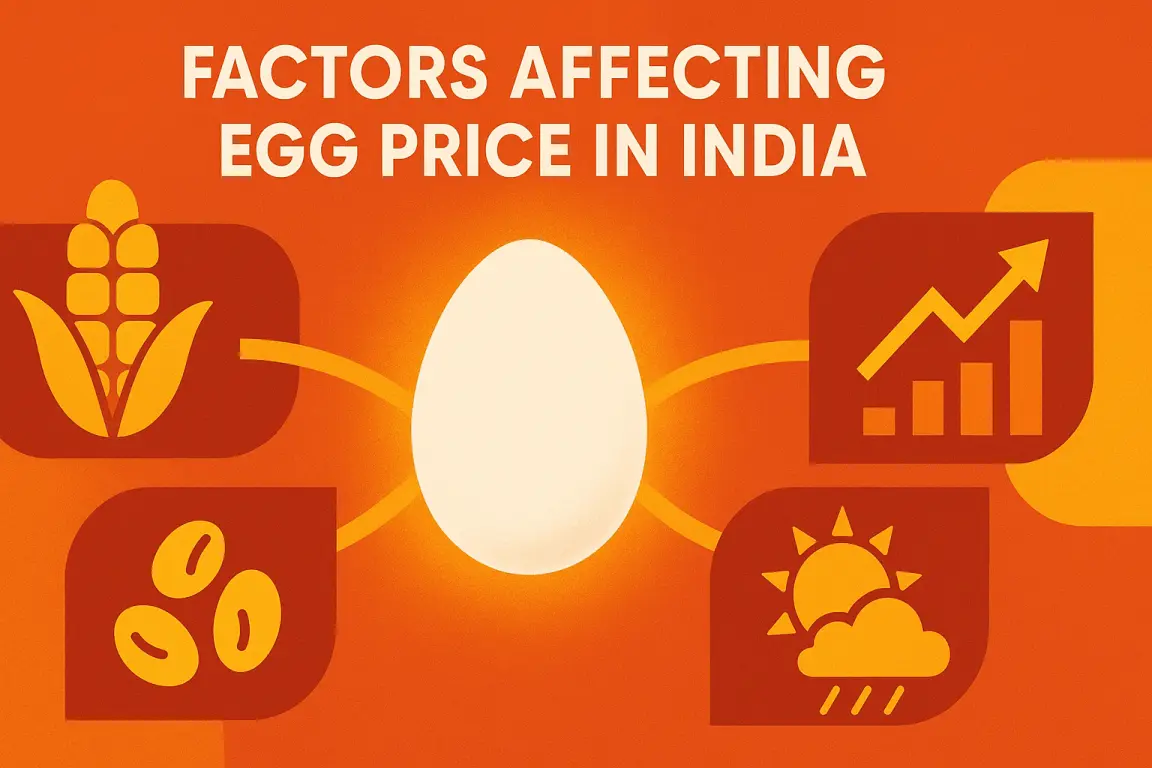
- Poultry Feed Cost (The #1 Driver): Maize and Soya meal constitute 60-70% of total production costs. Their prices are volatile, dictated by monsoon performance, domestic harvest cycles, and global commodity trends. A poor monsoon or extreme heat that damages these crops sends feed costs—and consequently, egg prices—soaring almost immediately.
- Veterinary & Medication Expenses: Maintaining flock health is non-negotiable. Costs for vaccinations, routine medications, and disease control (like during Avian Flu alerts) add significantly to operational expenses.
- Utilities & Labor: Modern poultry farming is energy-intensive. Rising electricity costs for ventilation, temperature control, and lighting, coupled with increasing labor wages and shed maintenance, steadily pressure production costs upwards.
The Law of Supply & Demand: The Market’s Pulse
This is the immediate force that adjusts prices at the wholesale mandi and retail counter.
- Seasonal Demand Cycles: Demand is highly seasonal. Winter (Oct-Jan) typically sees peak prices due to higher consumption as eggs are sought for protein and warmth. Conversely, demand dips during peak summer and specific holy months or fasting periods (e.g., Shravan, Kartika), leading to softer prices.
- Export Demand: India is a major exporter to the Middle East and neighboring countries. A surge in export orders can tighten domestic supply, pushing up local prices.
- Institutional Procurement: Large-scale, consistent demand from government schemes like the Mid-Day Meal Programme creates a strong demand floor, stabilizing markets to an extent.
Climate & Geography: Nature’s Logistical Challenges
Why does an egg cost more in Guwahati than in Namakkal? Geography and climate hold the answers.
- Extreme Weather Impact: Heat stress during severe summers (especially in North India) reduces hens’ feed intake and egg production, squeezing supply. Heavy monsoon rains disrupt logistics and increase disease risk in farms.
- Transportation & Logistics: Eggs are fragile, perishable goods. Diesel prices directly impact the cost of transporting them from major production hubs (Namakkal, Barwala, Hyderabad) to consumption centres. Poor road connectivity or bottlenecks can lead to spoilage and transit losses, adding to the final cost.
- Regional Price Differences: States far from production belts, like those in the Northeast, inherently have higher retail prices due to layered transportation and handling costs.
Organizational & External Influences
Beyond pure economics, structural and external factors play a defining role.
- The NECC Benchmark: The National Egg Coordination Committee (NECC) plays a pivotal role. It suggests a daily “Farm Gate Price” based on comprehensive input cost analysis and market sentiment. While this is a benchmark for traders, the final retail price includes additional margins for transport, handling, and retailer profit.
- Government Policies: Changes in GST, import/export duties on feed ingredients, or new animal welfare regulations can indirectly alter the cost structure for the entire industry.
- Disease Outbreaks: An Avian Influenza (Bird Flu) outbreak is a market shocker. It leads to immediate panic, a crash in consumer demand, and often mass culling. This creates a supply vacuum once the scare subsides, leading to sharp price increases later.
Market Sentiment & Information Flow
In a fragmented market, information asymmetry can cause price swings. Rumours of shortage, speculative hoarding by intermediaries, or a lag in information between wholesale and retail tiers can create temporary price spikes or dips that don’t always reflect the actual ground supply-demand situation.
Conclusion
The daily egg rate is a fascinating real-time example of a market economy at work. It balances the farmer’s struggle with input costs, the unpredictability of nature, the rhythms of cultural consumption, and the complexities of pan-India logistics. For stakeholders across the chain—from the producer to the consumer—navigating this volatility requires reliable, timely information.
This is where TodayEggRate.com adds value. We go beyond just listing numbers. We provide context, analysis, and city-specific insights to help you understand the ‘why’ behind the price. Whether you are a farmer planning sales, a retailer negotiating with a supplier, or a conscious consumer, we empower you with knowledge.
Stay informed with the market. Check the live, updated egg rates in your city and subscribe to our daily market analysis at TodayEggRate.com.
