
We’ve all been there: staring at a carton of eggs in the fridge, wondering if they’re still good. That “best by” date can be confusing, but there’s a simple, foolproof trick that gives you the answer in less than 30 seconds—no cracking required. Let’s crack the code on egg freshness!
The Magic Water Test: Your 30-Second Savior
Forget the sniff test. The easiest, most reliable way to check an egg’s freshness requires just a bowl of cold water.
- Fill a bowl or glass with enough cold water to fully submerge an egg.
- Gently place the egg into the water.
- Observe what happens.
Here’s how to interpret the results:
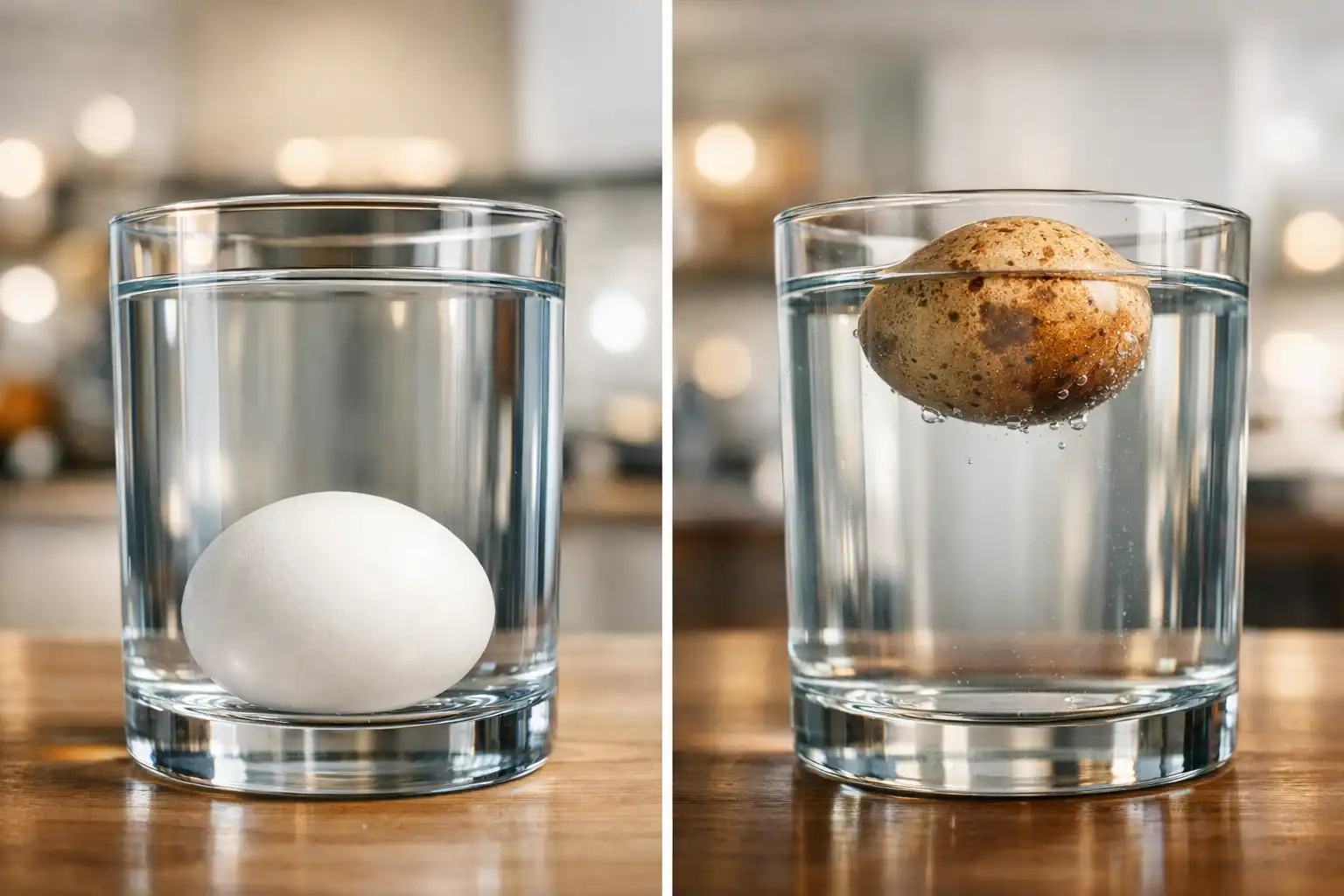
- The Egg Sinks and Lies Flat on Its Side: Fresh! This egg is at peak freshness. The air cell inside is small, meaning it’s recently laid.
- The Egg Sinks but Stands Upright or Tilts: Still Good to Eat! This egg is a bit older but perfectly safe. The air cell has enlarged slightly, causing it to stand up. Great for hard-boiling (older eggs peel easier!).
- The Egg Floats to the Top: Toss It. This egg has gone bad. A large air pocket has formed inside over time, causing buoyancy. Discard it without cracking to avoid a sulfurous stench.
Why does this work? Eggshells are porous. As an egg ages, moisture evaporates and is replaced by air, creating a larger air cell. More air = more buoyancy = an older (or rotten) egg.
Quick Backup Checks (Just in Case!)
If you’re still unsure after the water test, try these fast methods:
- The Shake Test: Hold the egg to your ear and give it a gentle shake. If you hear a distinct sloshing sound, the egg is old. A fresh egg will have almost no sound.
- The Visual & Sniff Test (After Cracking): Always crack an egg into a separate bowl before adding it to your recipe. A fresh egg has a firm, high yolk and a thick, gel-like white that doesn’t spread much. A rotten egg will have a flat yolk and a thin, runny white. Most importantly—your nose will know. A rotten egg releases a unmistakable, pungent sulfur smell.
How to Store Eggs for Maximum Freshness
- Keep them cold: Store eggs in the coldest part of your fridge (not the door) at or below 40°F (4°C).
- Use the carton: The carton protects eggs from absorbing strong odors and prevents moisture loss.
- Check the date: For reference, “best by” dates are a good guideline, but the water test is the real hero.
Pro Tip: For baking where freshness matters (like poached or fried eggs), use the freshest eggs in your carton. Older eggs are ideal for hard-boiling, scrambling, or frittatas.
Knowing how to test an egg in seconds saves you money, prevents food waste, and spares you from a potentially nasty surprise in your breakfast. Give the water test a try—it’s a simple kitchen hack that never fails!
Share this tip with a friend who needs it! 🥚✅
