
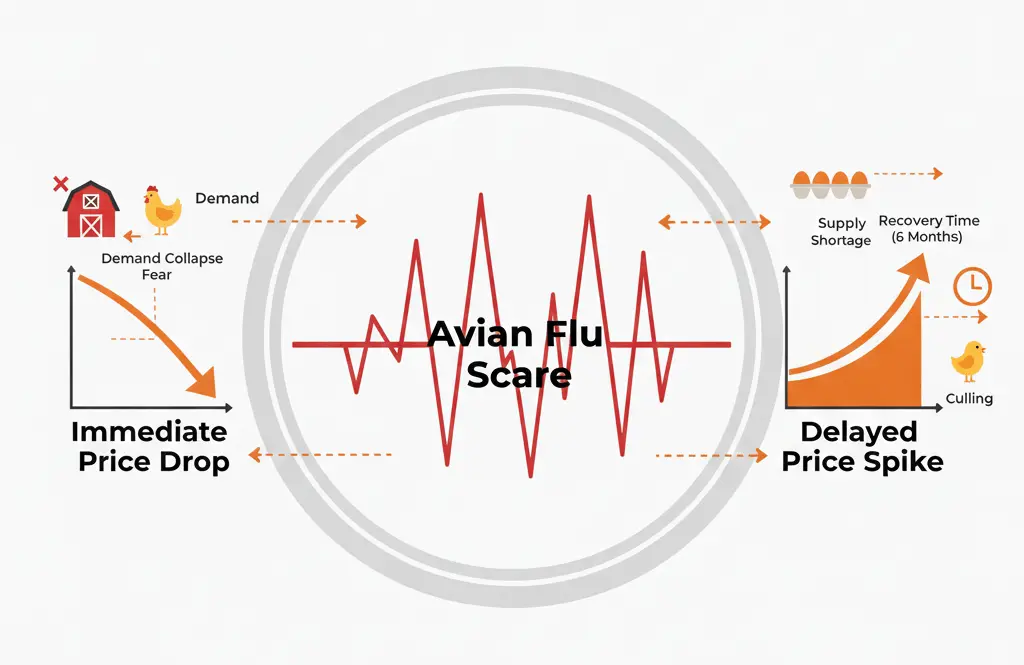
The news breaks: “Bird Flu detected in poultry farm.” Almost overnight, the market reacts. Shelves empty not from a buying spree, but from a sudden, fearful retreat. Eggs, a daily staple, are suddenly viewed with suspicion.
Avian Influenza, or Bird Flu, is primarily a disease affecting birds, caused by Type A viruses. Strains like H5N1 can be severe for poultry, but human transmission is extremely rare, especially from properly cooked eggs or chicken. The immediate risk is not to public health, but to market stability.
This article explains how an Avian Flu scare creates a dual economic shock: a short-term demand collapse and a long-term supply shortage, leading to a predictable cycle of price volatility that impacts every stakeholder—from the farmer to the consumer.
Phase 1: The Immediate Shock – Panic in the Market
A. The Demand Collapse
Fear, fueled by alarming headlines, changes consumer behavior instantly.
- What Happens: Consumers drastically reduce or completely stop buying eggs and poultry products.
- Price Impact: This sudden vacuum in demand causes the Farm Gate Price to crash. The NECC daily rate plummets as farmers face a market that has disappeared overnight.
B. The Farmer’s Dire Dilemma
For poultry farmers, this phase is catastrophic.
- Selling at a Loss: Eggs are perishable. With no buyers, farmers are forced to sell their daily produce far below the cost of production, incurring massive daily losses.
- Mandated Culling: In confirmed outbreak zones, authorities order the culling (humane destruction) of entire flocks within a radius to contain the virus. This represents a total loss of inventory and capital for the affected farmers.
C. The Crucial Education Gap
A key driver of this panic is a lack of clear public information.
- The Safety Fact: The Avian Flu virus is destroyed at cooking temperatures (70°C or above). Properly boiled, scrambled, or fried eggs are perfectly safe to consume.
- The Gap: This scientific reassurance often gets lost in the noise of the scare, prolonging the demand slump.
Phase 2: The Long-Term Impact – The Inevitable Price Spike
Once the immediate scare subsides and culling operations end, the market faces a delayed second shock.
A. The Emerging Supply Shortage
The culling leads to a significant reduction in the national laying hen population. Rebuilding this flock isn’t quick.
- The Time Lag: It takes 18 to 24 weeks (4-6 months) to raise a new chick to a productive laying hen. This creates a prolonged period of reduced egg supply.
B. The Sharp Price Rebound
As public fear fades and normal consumption resumes, demand returns to pre-outbreak levels. But now, it meets a constrained supply.
- Price Impact: This mismatch triggers a sharp and sustained increase in retail prices. Eggs can become significantly more expensive, often reaching historic highs for several months. The consumer who avoided eggs out of fear now pays a premium for them.
C. Investor Hesitation and Prolonged Shortage
The trauma of the outbreak has a lingering psychological effect.
- Risk Aversion: Having faced total loss, farmers and investors are hesitant to reinvest in new birds immediately, fearing another outbreak. This caution can prolong the supply gap, keeping prices elevated for longer.
Navigating the Crisis: Best Practices for Stakeholders
For Consumers:
- Cook Thoroughly: Ensure eggs and poultry are well-cooked. Safety is in the kitchen.
- Stay Calm & Informed: Seek updates from official sources like the ICMR, WHO, or the Ministry of Fisheries, Animal Husbandry & Dairying, not sensational reports.
- Understand the Cycle: Recognize that panic-driven avoidance can later lead to higher prices.
For Farmers & Industry:
- Prioritize Biosecurity: The first line of defense. Strict farm hygiene, controlled access, and sanitization are non-negotiable investments.
- Explore Insurance: Poultry insurance schemes can provide a critical financial safety net during mandated culling, helping farms survive and rebuild.
For the Ecosystem:
- Clear, Timely Communication: Authorities must communicate risks and safety facts clearly and swiftly to prevent needless panic and market distortion.
Conclusion: Navigating the Volatility
An Avian Flu outbreak is more than a animal health issue; it’s a powerful external shock to the entire egg economy. It creates a predictable pattern: Fear leads to a price crash, which leads to a supply crunch, followed by a price spike.
Understanding this cycle is crucial. It helps consumers make rational, safe choices without panic. It helps farmers and retailers anticipate market shifts. And it underscores the need for resilient systems and informed communication.
When the market is volatile, information is your most valuable tool. Track the real-time recovery and price stabilization in your area with live, reliable data.
Monitor the live, city-wise egg prices and market trends on TodayEggRate.com to make calm, informed decisions for your home or business.
