
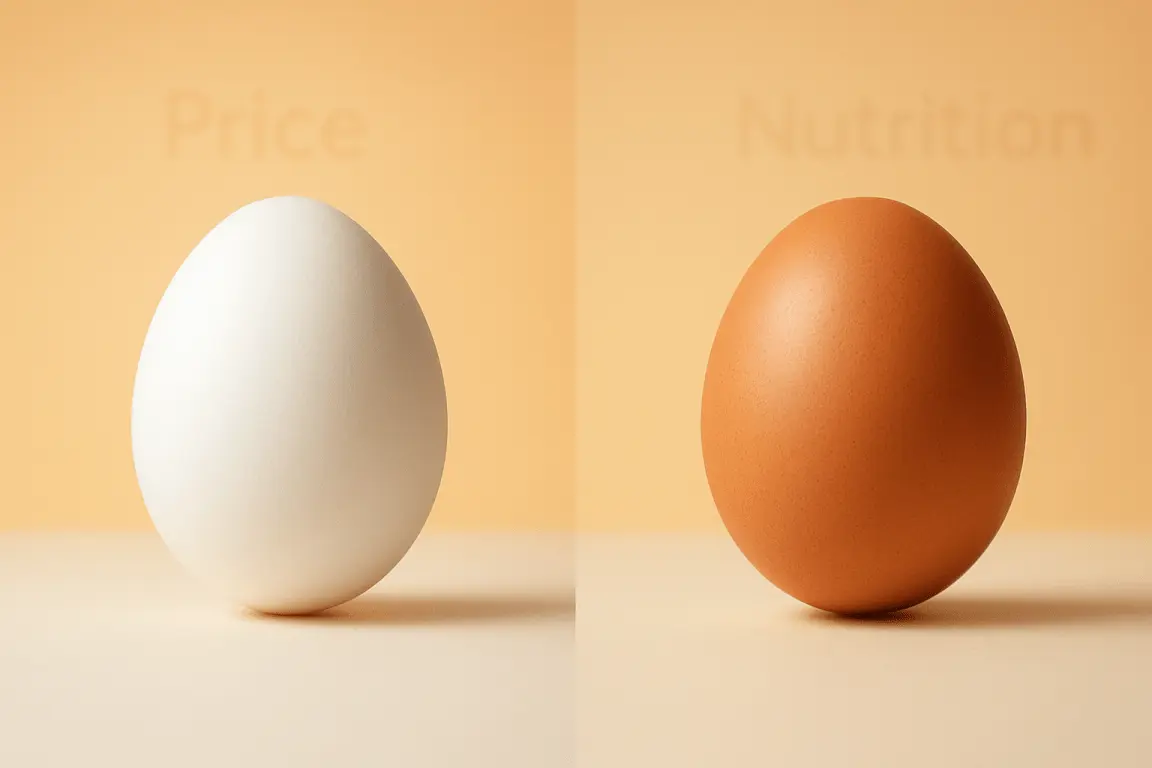
You’ve faced this choice countless times. Standing in the grocery aisle, you see two trays: one with classic white eggs at a familiar price, and next to it, brown eggs with a noticeably higher price tag. A silent question pops into your head: “Are the brown ones healthier? Is the extra cost justified?”
Let’s clear the air immediately. The single most important fact you need to know is this: The color of an egg’s shell has no bearing on its nutritional value, taste, or quality.
The price difference is a story of biology, economics, and perception, not health. This article breaks down the real reasons behind the brown and white egg divide in the Indian market, empowering you to make an informed, budget-friendly choice.
The Real Difference: It’s All About the Hen
The secret lies not in the egg, but in the chicken that laid it.
A. The Source of the Color
Think of shell color like human hair color—it’s a genetic trait.
- White Eggs: Are laid by hens with white feathers and white earlobes, like the common White Leghorn breed. These are prolific layers and industry favorites.
- Brown Eggs: Are laid by hens with red or brown feathers and red earlobes, like Rhode Island Reds or other heavier breeds.
- The Science: The pigment protoporphyrin, derived from hemoglobin, is deposited on the shell as the egg travels through the hen’s oviduct. It’s a purely cosmetic coating.
B. Debunking the Nutritional Myth
If two hens—one white, one brown—are fed the exact same diet, their eggs will have virtually identical nutritional profiles: the same amount of protein (about 6g per egg), vitamins, minerals, and cholesterol.
The Crucial Caveat: True nutritional differences come from the hen’s diet and lifestyle, not her feather color. An egg labeled “Omega-3 Enriched,” “Organic,” or “Free-Range” will have different nutrients because of special feed or living conditions, regardless of whether its shell is white or brown.
Decoding the Price Difference in India
So why do brown eggs almost always cost more? It boils down to production economics and consumer psychology.
A. Higher Production Costs
The breeds that lay brown eggs are typically larger-bodied birds.
- They consume more feed to maintain their body weight.
- They often lay fewer eggs over their lifetime compared to the highly efficient White Leghorn.
- This higher cost of production per egg is passed on to the consumer.
B. Demand & Perception (The “Desi Anda” Factor)
In the Indian market, brown eggs are powerfully marketed and perceived as:
- “Desi” or “Country” Eggs: Linked to a nostalgic idea of rustic, native chickens.
- More “Natural” or “Organic”: Their darker shell is often (incorrectly) associated with a healthier, chemical-free product.
- A Premium Product: This perceived value allows retailers to command a higher price, especially in urban, health-conscious markets.
C. The Specialty Egg Caveat
Sometimes, the higher price is justified—but not because of the color. If the brown eggs are genuinely certified organic, free-range, or nutrient-enriched, the price reflects those specific (and costlier) farming practices. Always read the label, not just the shell.
Nutritional Comparison: The Truth in a Table
| Feature | White Egg | Brown Egg | The Bottom Line |
|---|---|---|---|
| Protein | ~6 grams | ~6 grams | Identical. No difference. |
| Vitamins (A, B12, D) | Present | Present | Identical. Depends on the hen’s feed. |
| Minerals (Iron, Zinc) | Present | Present | Identical. |
| Cholesterol | ~186 mg | ~186 mg | Identical. Shell color doesn’t affect this. |
| Taste & Texture | Same | Same | Identical. Freshness and cooking method are what matter. |
| Yolk Color | Can be pale or deep yellow | Can be pale or deep yellow | Depends on feed (maize, marigold). Not linked to shell. |
Key Takeaways for the Smart Indian Consumer
- Diet Over Color: For better nutrition, look for specific labels like “Omega-3 Enriched” or “Organic,” not just a brown shell.
- Freshness is King: A fresh white egg is nutritionally superior to a stale brown egg. Always check dates.
- Let Your Budget Lead: If price is your primary concern, white eggs offer the same core nutrition at a lower cost. There’s no health penalty for choosing them.
- Don’t Judge by Yolk Color: A deep orange yolk indicates a diet rich in corn or marigold petals, not a “desi” or healthier egg.
Conclusion: Your Wallet, Your Choice
The brown vs. white egg debate is primarily one of cosmetics and cost, not nutrition. The price gap is driven by the economics of raising different breeds and powerful market perceptions.
Your best strategy? Ignore the shell and focus on freshness, your dietary needs, and your budget.
Before your next grocery run, make an empowered choice. Check the live, updated prices for both white and brown eggs in your city on TodayEggRate.com to ensure you get the best value for your money!
