
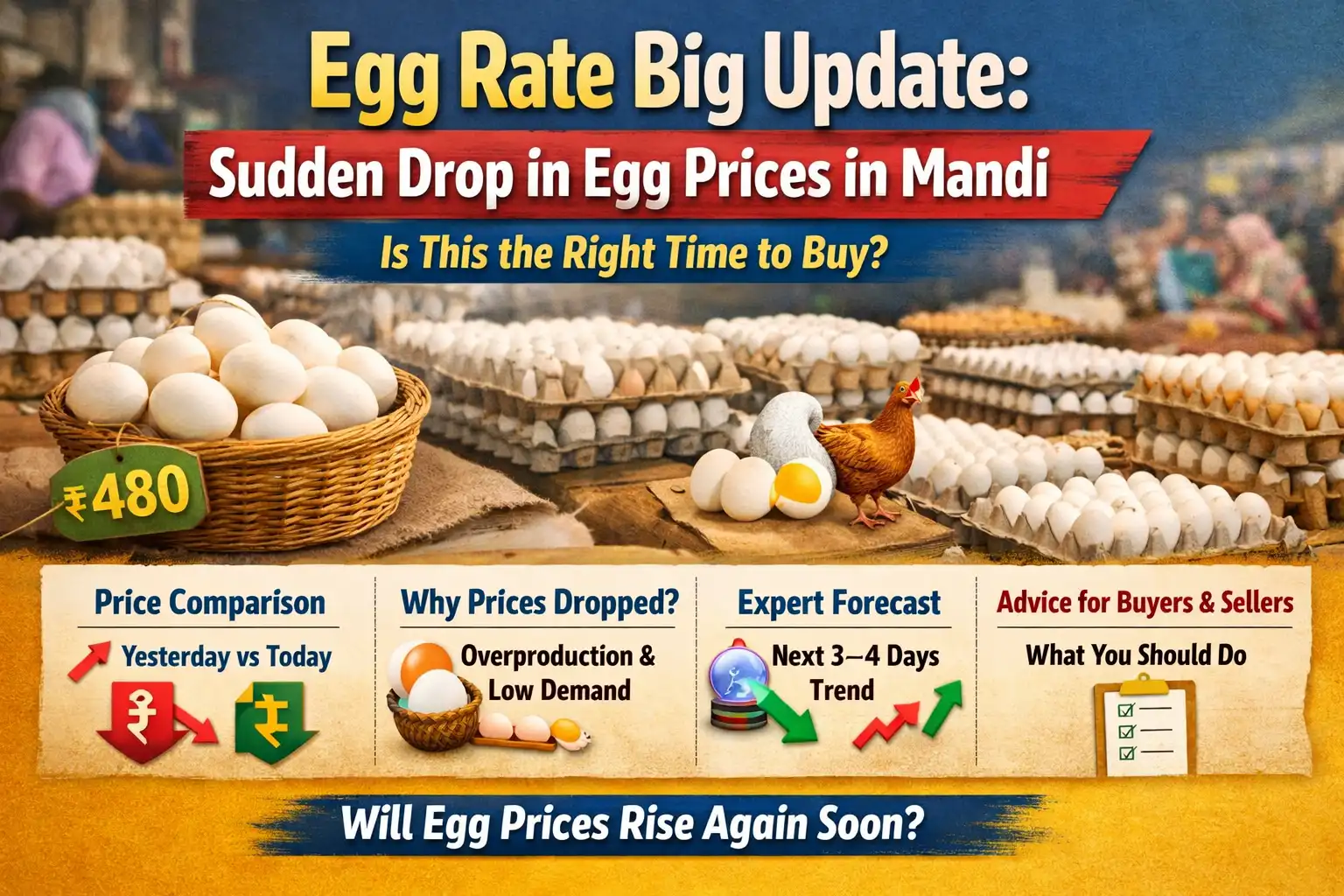
The egg market has witnessed a surprising shift today, catching both consumers and traders off guard. In several mandis across the country, egg prices have dropped sharply compared to previous days. This sudden decline has created a buzz among retailers, wholesalers, and households alike.
For regular buyers, this could mean short-term savings. However, for poultry farmers and suppliers, the drop raises concerns about profit margins and demand fluctuations. Understanding whether this is a temporary dip or a longer trend is crucial before making any buying decisions.
Price Comparison: Today vs Yesterday
Here’s a quick comparison of egg prices to help you understand the sudden change:
| Market (Mandi) | Yesterday Price (per 100 eggs) | Today Price (per 100 eggs) | Difference |
|---|---|---|---|
| Delhi | ₹520 | ₹415 | -₹105 |
| Mumbai | ₹540 | ₹480 | -₹60 |
| Hyderabad | ₹500 | ₹420 | -₹80 |
| Chennai | ₹540 | ₹505 | -₹35 |
The data clearly shows a noticeable drop across major markets, indicating a broader trend rather than a localized fluctuation.
The Reason: Why Are Egg Prices Falling?
There are two primary factors driving this sudden drop in egg prices:
1. Overproduction in Poultry Farms
Poultry farms have increased production in anticipation of higher demand, especially after recent price hikes. However, supply has now exceeded current market demand, leading to a price correction.
2. Temporary Drop in Demand
Demand for eggs has slightly decreased due to seasonal changes and shifting consumption patterns. In some regions, dietary preferences fluctuate during certain periods, which directly impacts egg sales.
3. Market Adjustment Phase
After a period of continuous price increases, the market often undergoes a natural correction. This helps stabilize prices and maintain long-term balance between supply and demand.
Expert Opinion: What Will Happen in the Next 3–4 Days?
Market experts believe that this price drop may not last long.
- If demand picks up again, especially from hotels, bakeries, and bulk buyers, prices could rebound quickly.
- A reduction in supply from farmers reacting to lower prices may also push rates upward.
- However, if demand remains weak, prices might stay stable or drop slightly further.
Overall, experts suggest that the market is currently in a short-term adjustment phase rather than a long-term decline.
Conclusion: What Should Buyers and Sellers Do?
For Consumers:
This is a good opportunity to purchase eggs at lower prices, especially if you buy in bulk. However, since prices may fluctuate again soon, avoid overstocking unless storage conditions are suitable.
For Retailers:
Retailers should take advantage of lower wholesale prices but remain cautious about future fluctuations. Maintaining a balanced inventory is key to avoiding losses if prices rise suddenly.
For Poultry Farmers:
Farmers should monitor demand trends closely and avoid overproduction in the coming days to prevent further price drops.
In conclusion, the current dip in egg prices presents a short-term opportunity for buyers, but the market remains dynamic. Keeping an eye on daily price trends and expert insights will help you make smarter decisions in the coming days.
