
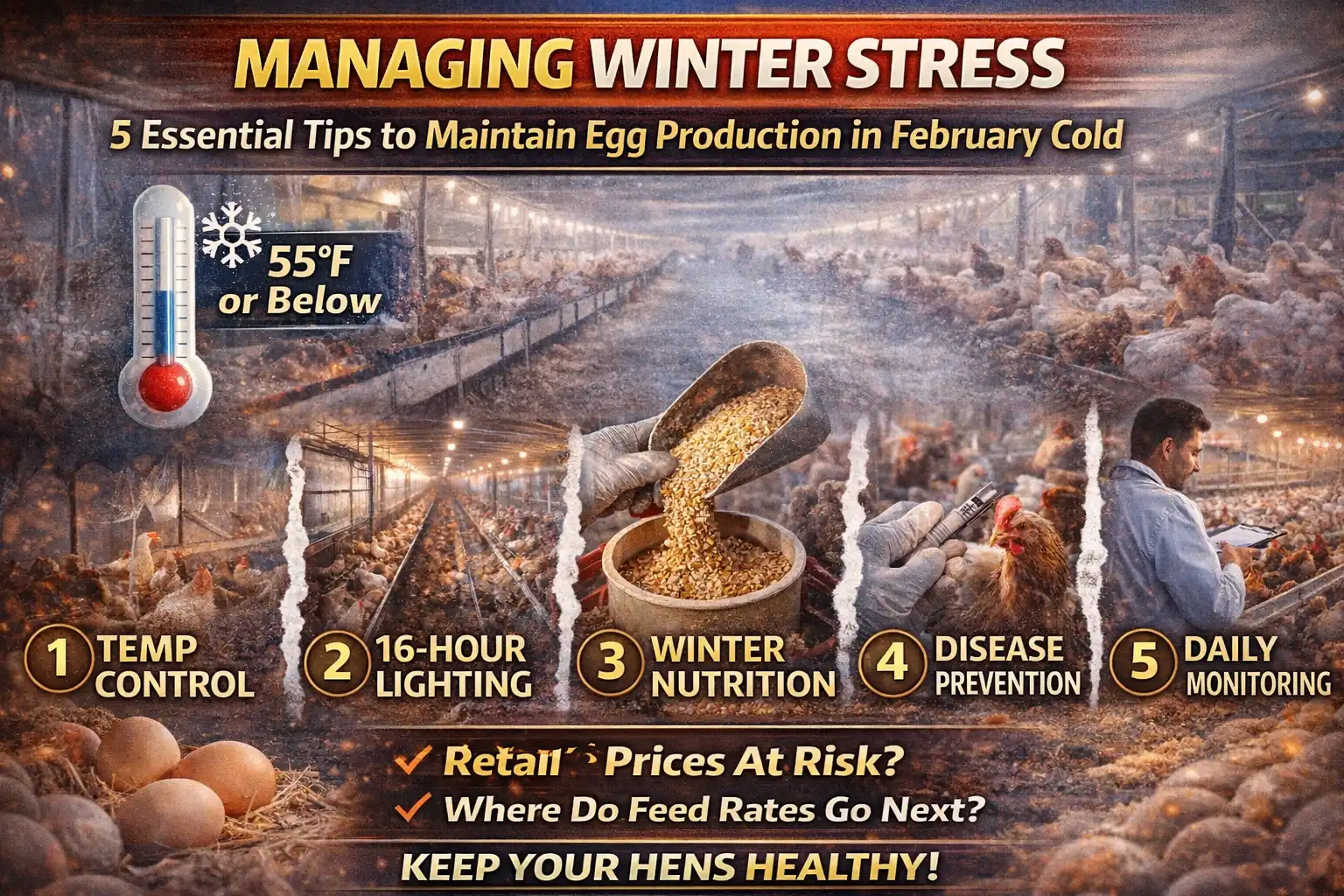
February is a tricky transition month for poultry farmers. While winter is slowly easing, cold nights and fluctuating temperatures can still stress birds. This stress often leads to a drop in egg laying rate, directly impacting farm output and market supply.
Here’s a practical, expert-backed winter management guide to help maintain steady egg production through late winter.
The Core Problem: Why Egg Production Drops in Late Winter
When temperatures fall below 55°F (≈13°C), layer birds divert energy from egg production to maintain body heat.
Common effects include:
- Reduced feed efficiency
- Lower laying percentage
- Increased susceptibility to disease
Without timely intervention, even a short cold spell can reduce weekly output.
Tip 1: Temperature Control Is Non-Negotiable
- Block cold air drafts, especially at night
- Use curtains or plastic sheets on open sides
- Keep litter dry to avoid additional cold stress
A stable shed temperature helps birds use energy for eggs, not survival.
Tip 2: The Lighting Secret – Follow the 16-Hour Rule
Shorter winter days reduce natural daylight, confusing the birds’ laying cycle.
Best practice:
- Maintain 16 hours of light daily (natural + artificial)
- Use low-watt LED bulbs evenly across the shed
- Avoid sudden light on/off changes
Consistent lighting signals birds to continue normal egg-laying rhythms.
Tip 3: Nutrition Check – Adjust Winter Feed Smartly
In winter, birds need more energy-dense diets.
Key adjustments:
- Slightly increase protein levels
- Add controlled fat sources for extra energy
- Ensure constant access to clean, unfrozen water
Proper nutrition offsets cold stress and supports stable egg mass and shell quality.
Tip 4: Disease Prevention – Vaccination Matters More in Cold Weather
Late winter is a high-risk period for respiratory diseases.
Focus on protection against:
- Newcastle disease
- Infectious bronchitis
Cold stress weakens immunity, so up-to-date vaccination schedules are essential to avoid sudden production crashes.
Tip 5: Monitor Birds Daily, Not Weekly
Small warning signs matter:
- Drop in feed intake
- Huddling behavior
- Sudden egg count variation
Early action can prevent a minor dip from becoming a major loss.
Why This Matters for Egg Prices Too
Lower farm-level production during late winter:
- Tightens short-term supply
- Keeps market prices firm
- Delays seasonal price correction
That’s why February farm management decisions affect both farmer income and consumer prices.
Final Takeaway
February cold doesn’t have to mean lower egg production. With:
- Proper temperature control
- Correct lighting
- Smart nutrition
- Timely vaccination
farmers can protect output and profitability even in late winter conditions.
For daily egg price updates, official market signals from NECC, and expert poultry management tips, stay connected with todayeggrate.com.
Healthy birds lay better—no matter the season. 🐔🥚📊
