
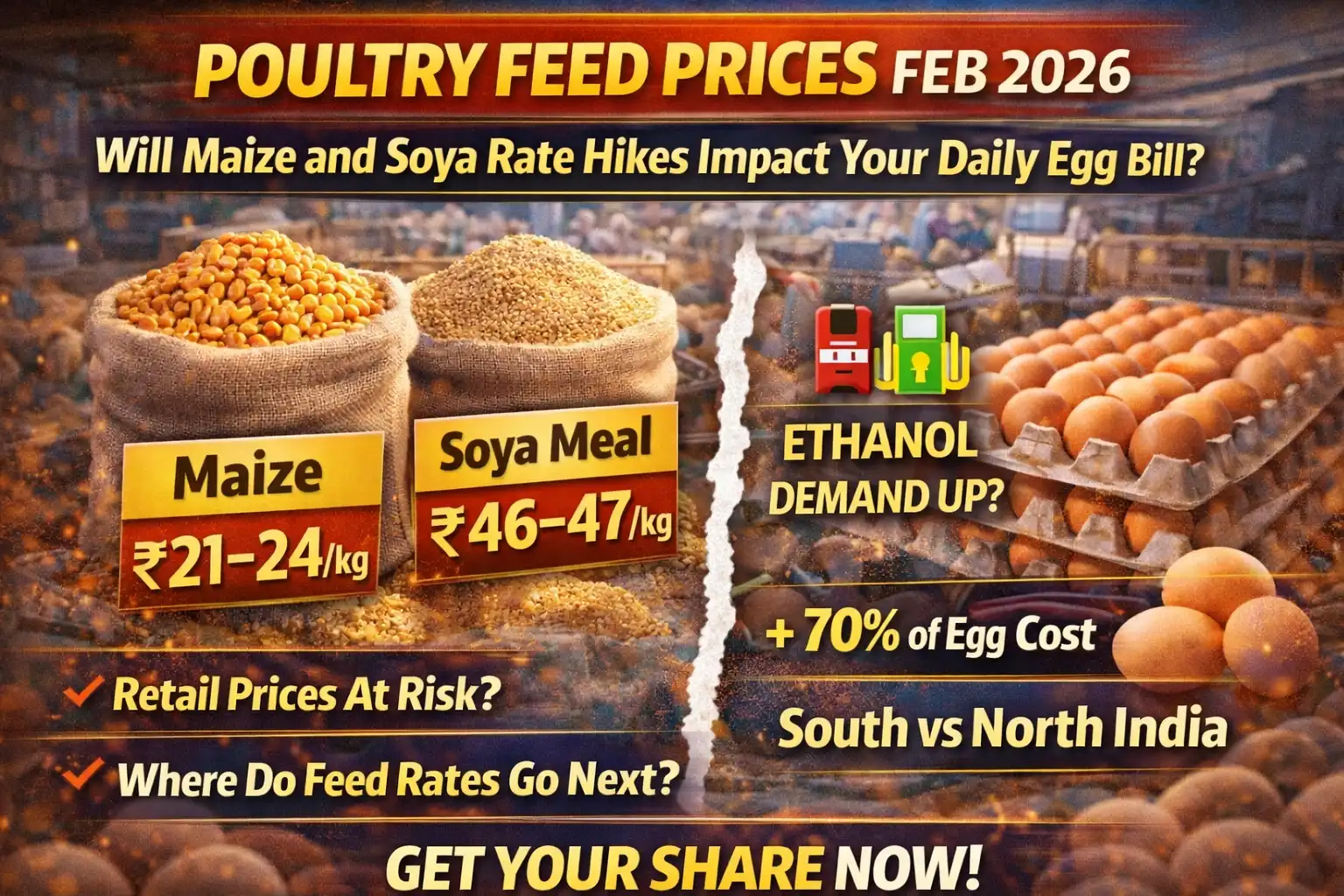
When egg prices move, the real story often starts far from the retail counter—inside poultry feed markets. Feed accounts for nearly 70% of egg production cost, and even small changes in maize and soya meal prices can ripple straight to your daily egg bill.
Here’s a clear February 2026 feed-price snapshot, what’s driving it, and what it likely means for egg prices over the next two weeks.
Current Feed Rates: Where Maize & Soya Stand Now
As of early February 2026, poultry feed inputs are trading in a firm but controlled range across most markets:
- Maize: ~₹21–₹24 per kg (region-dependent)
- Soya meal: Firm bias, with localized tightness near processing hubs
Prices aren’t spiking—but they’re not easing either, which keeps production costs elevated for farmers.
The Ethanol Factor: Why Maize Demand Is Under Pressure
One major reason maize isn’t getting cheaper is ethanol blending.
- Higher ethanol production has increased industrial demand for maize
- This diverts a portion of supply away from animal feed
- Feed mills face tighter availability during peak demand weeks
Net effect: maize prices find a floor, limiting any sharp downside—even when harvest flows improve.
Direct Impact on Eggs: What Higher Feed Costs Mean for Retail Prices
Here’s how feed costs translate to what you pay:
- Feed = ~70% of egg production cost
- When maize/soya prices stay firm, farmers resist price cuts
- Current retail eggs (₹6–₹7 per egg in many cities) remain supported
In short, no feed relief = no big egg price drop—especially while demand holds steady.
Regional Trends: South vs North India Feed Availability
Feed dynamics aren’t uniform across India:
South India
- Proximity to ports and processing units
- Better access to soya meal and compound feed
- Prices steadier, but demand-heavy poultry belts keep pressure intact
North India
- Strong maize sourcing from local mandis
- More exposed to ethanol-linked maize demand
- Slightly higher volatility in feed costs
This regional gap explains why egg prices often correct faster in the north—or spike sooner when feed tightens.
15-Day Outlook: What to Expect Next
Base-case scenario (most likely):
- Feed prices stay range-bound
- Egg prices remain stable to mildly firm
Upside risk:
- Ethanol demand spikes or logistics disruptions
- Feed costs rise → eggs edge up
Downside chance:
- Better maize arrivals + demand pause
- Small relief, but no crash expected
Bottom line: Over the next 15 days, expect stability with mild upward bias, not sharp swings.
The Takeaway for Consumers & Farmers
- Feed costs are the real price driver
- Maize and soya aren’t cheap enough yet to pull eggs down
- Any egg price relief will depend on feed softening first
For daily egg prices, feed-market signals, and cost-to-price analysis, keep tracking todayeggrate.com.
When you understand feed, you understand egg prices. 🥚📊
