
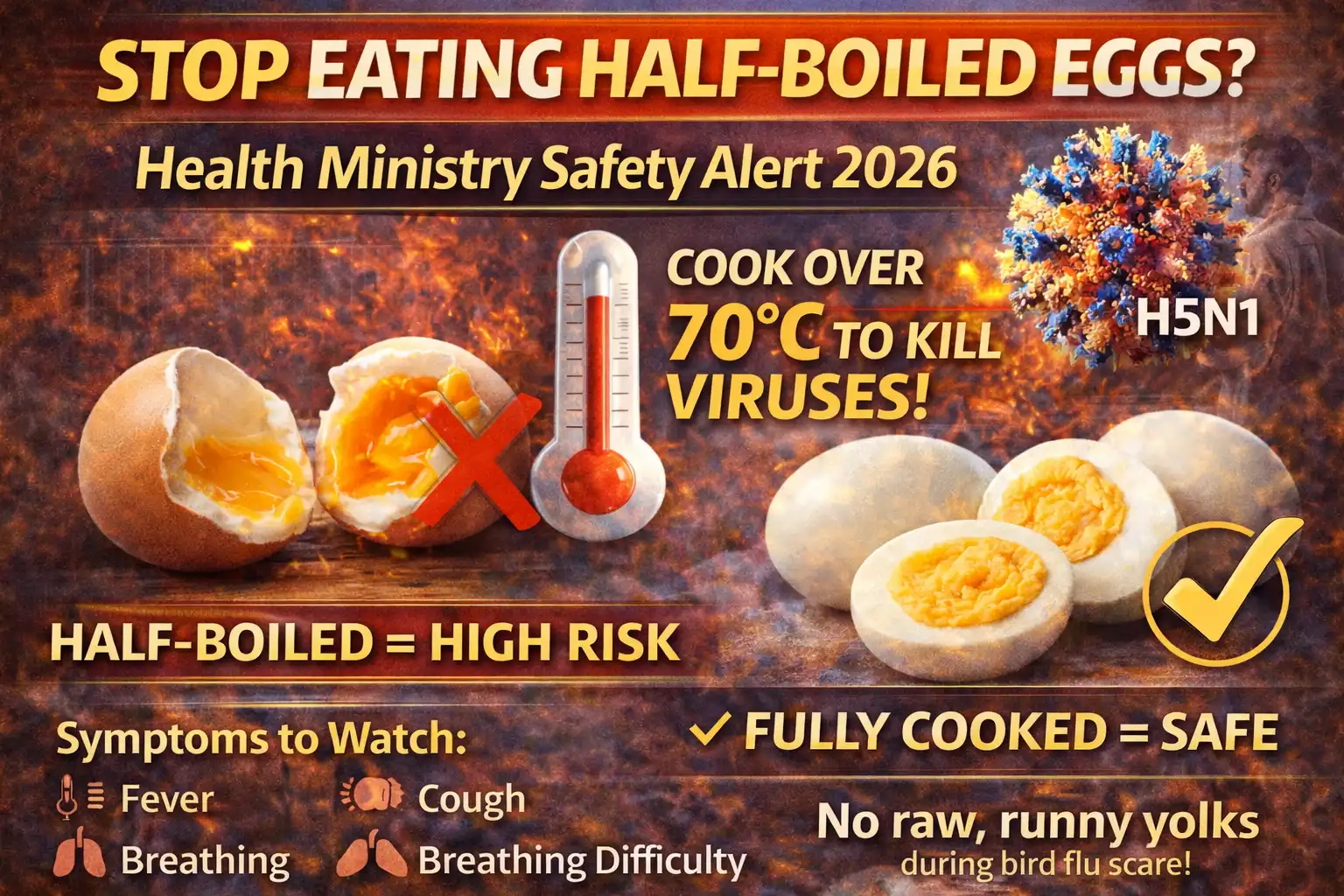
February 2026 has brought renewed health alerts around Avian Influenza (H5N1), and food safety is back in the spotlight. With bird flu updates trending and official advisories circulating, one message is coming through loud and clear: undercooked poultry products are a risk right now.
If you consume eggs daily—especially half-boiled, runny yolks, or raw eggs—this is an update you should not ignore.
Why This Advisory Matters in 2026
Recent warnings from the Ministry of Health and Family Welfare emphasize extra caution while handling and consuming poultry products during ongoing avian flu monitoring.
Key concern:
- Viruses linked to bird flu do not survive high cooking temperatures
- They can survive in raw or undercooked eggs and meat
This makes cooking habits—not just sourcing—critical for consumer safety.
Safe Cooking Rule: Temperature Is Everything
Health experts are clear on one point:
✅ Eggs must be cooked above 70°C (158°F)
At this temperature:
- Avian influenza viruses are effectively destroyed
- Bacterial risks like Salmonella are also minimized
Safe egg forms right now:
- Fully boiled eggs (hard yolk)
- Properly cooked omelettes
- Scrambled eggs with no liquid portion
❌ Avoid for now:
- Half-boiled eggs
- Runny yolks
- Raw egg shakes or desserts
The “Half-Boiled” Risk: What Fitness Lovers Need to Know
Many gym-goers and athletes prefer:
- Raw eggs
- Soft-boiled eggs
- Liquid yolks for “maximum protein”
In February 2026, this habit is risky.
Why?
- Protein quality remains the same even after full cooking
- The only thing lost by undercooking is safety
👉 For the next few months, fully cooked eggs are the smarter choice—even for muscle recovery diets.
Symptoms to Watch If You’ve Consumed Unsafe Poultry
If someone has eaten undercooked eggs or poultry and develops symptoms, seek medical advice promptly.
Watch for:
- Fever
- Cough or sore throat
- Breathing difficulty
- Body aches
- Gastrointestinal upset
Early reporting reduces complications and spread.
Kitchen Hygiene: More Important Than Ever in 2026
Along with proper cooking:
- Wash your hands after handling eggs
- Use separate utensils for raw and cooked food
- Clean kitchen surfaces thoroughly
- Store eggs refrigerated and uncracked
These steps dramatically lower household risk.
Final Word: Safety First, Always
Eggs remain a high-quality, affordable protein, and there is no ban on eating eggs.
The only change required in 2026 is how you cook them.
- Fully cooked = safe
- Half-boiled = avoid (for now)
For daily egg price updates, consumer safety alerts, and health-focused food guidance, keep checking todayeggrate.com.
Good nutrition starts with safe habits—especially in uncertain times. 🥚🛡️
