
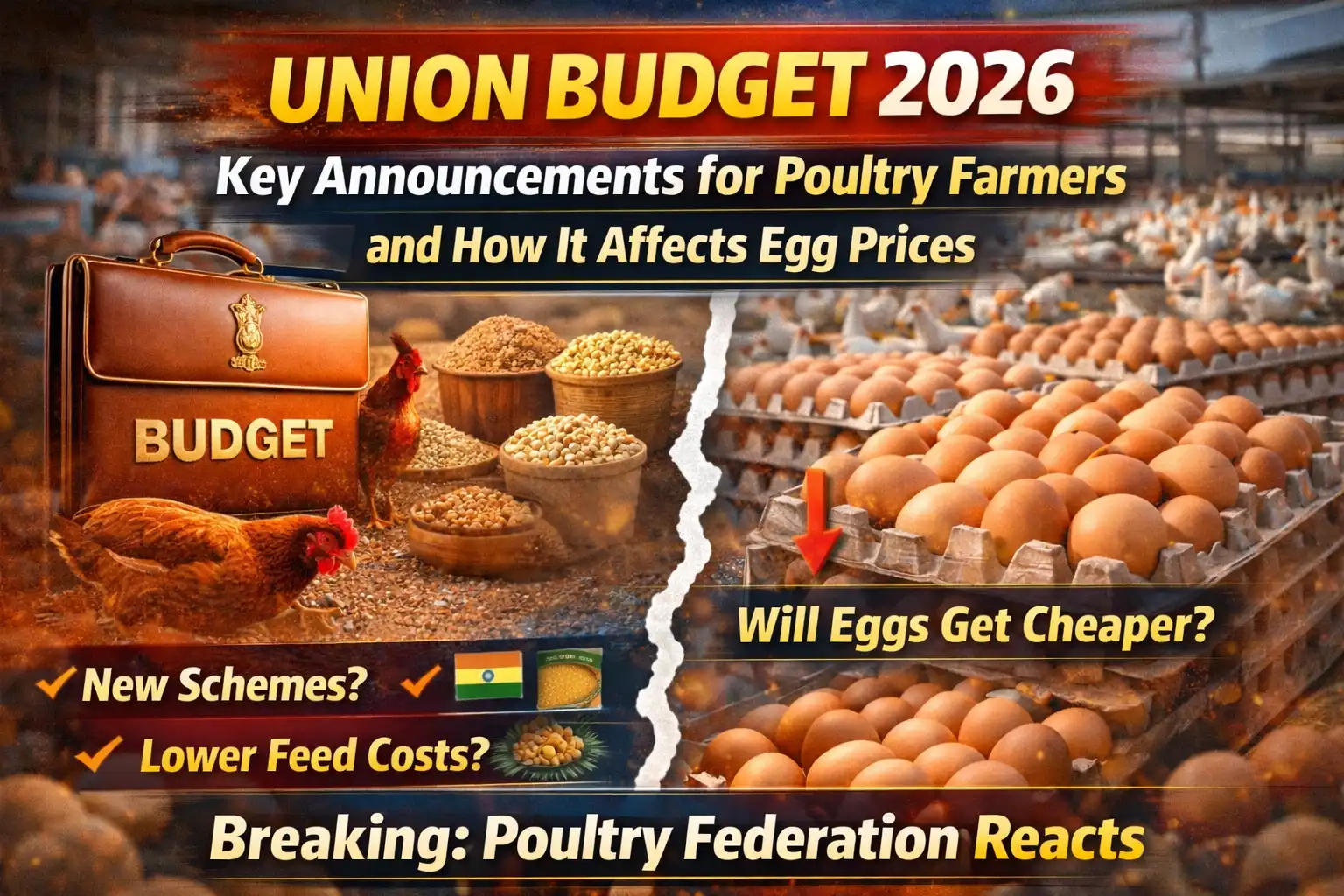
With the Union Budget 2026 announced today, the poultry sector has suddenly come into sharp focus. From farmers to consumers, everyone is asking the same question: Will Budget 2026 bring relief to the poultry industry—and could that finally cool down egg prices?
Here’s a clear, Discover-friendly breakdown of what matters most for poultry farmers and egg buyers.
Top Budget News: What Did the Poultry Sector Get?
In Budget 2026, the government has reiterated its focus on agri-allied sectors, including poultry, as part of rural income growth and nutrition security.
Key takeaways for poultry farmers include:
- Continued support for animal husbandry & allied infrastructure
- Push for modern poultry farms, cold chains, and bio-security
- Easier access to institutional credit for small and mid-size farmers
While there is no headline “egg-only subsidy”, the overall policy direction remains supportive rather than restrictive, which is positive for long-term supply stability.
Feed Costs in Focus: What About Maize & Soya?
Feed accounts for nearly 65–70% of egg production cost, so Budget decisions here matter the most.
This year’s Budget signals:
- No sharp increase in import duties on maize and soya derivatives
- Emphasis on improving domestic oilseed and maize production
- Stable input-cost outlook rather than sudden shocks
In simple terms, feed prices are unlikely to spike due to policy changes, which reduces the risk of further egg price inflation.
Consumer Impact: Will Eggs Get Cheaper After Budget 2026?
Budget 2026 alone will not cause overnight price drops, but it sets the tone for the coming months.
What consumers should realistically expect:
- Short term: Prices remain firm due to exports and winter demand lag
- Medium term: Better supply flow as production ramps up
- Long term: More stable pricing if feed and logistics costs stay under control
So yes, Budget 2026 supports price stability, but actual rate correction will still depend on supply cycles.
Industry Reaction: What Poultry Leaders Are Saying
Early reactions from industry bodies, including the Poultry Federation of India, suggest:
- Budget is growth-oriented, not disruptive
- Focus on infrastructure is welcomed
- Predictable policy helps farmers plan new production cycles
Industry leaders believe that policy stability is more important than short-term subsidies, especially in an export-linked market.
What This Means for Egg Prices in 2026
- Budget 2026 does not add new inflation pressure on eggs
- Feed and production costs look policy-stable
- Any price relief will come gradually through higher supply, not announcements
For consumers, this means no sudden shock—but also no instant cheap eggs.
Stay Updated, Not Surprised
Egg prices react daily to market forces—not just the Budget.
For daily city-wise egg rates, NECC-linked updates, and post-Budget price trends, keep tracking todayeggrate.com.
In 2026, informed buyers will always spend less than surprised buyers. 🥚📊
