
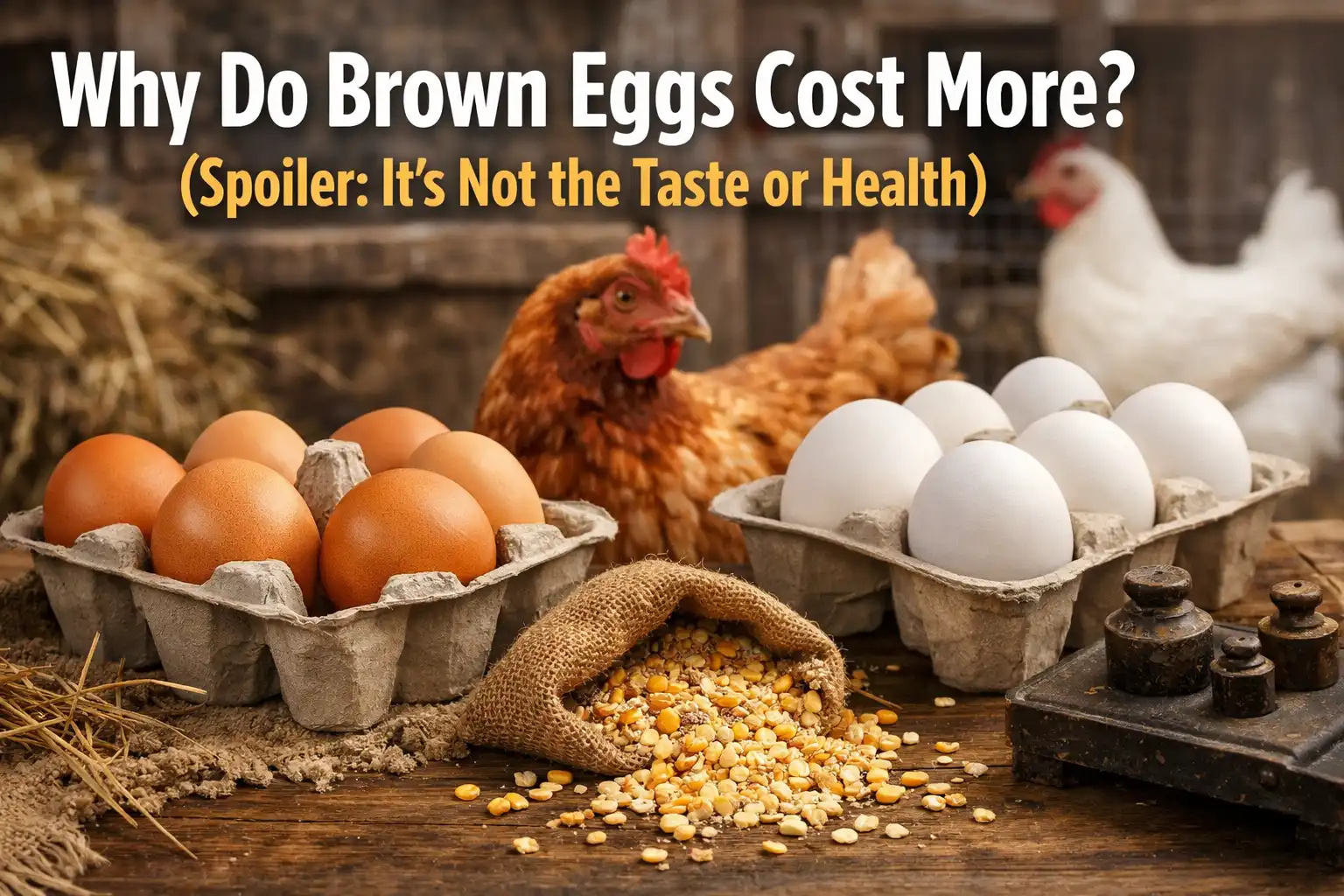
If you have ever stood in the dairy aisle comparing a bright white carton to a rustic brown one, you have likely asked yourself a very reasonable question: Why on earth are the brown eggs more expensive? It is one of the most persistent mysteries of the grocery store.
Many shoppers instinctively reach for the brown carton, assuming that a higher price tag and an earthy hue signal a healthier, more natural, or tastier product. However, science and economics tell a different story. Despite the price gap—which can sometimes be significant—there is no nutritional or flavor difference between the two.
So, if the inside of the egg is the same, why is the shell costing you extra? The answer is a fascinating mix of chicken biology, farming economics, and clever marketing.
The Chicken and the Egg (Shell)
The first thing to understand is that the color of an egg is not a design choice—it is a genetic trait determined solely by the breed of the hen.
- White Eggs: Generally laid by hens with white feathers and white earlobes, specifically the White Leghorn. These birds are the superstars of the commercial egg industry.
- Brown Eggs: Laid by hens with red feathers and red earlobes, such as the Rhode Island Red or the Plymouth Rock.
Interestingly, the breed determines more than just the paint job; it determines the bird’s size and appetite—and this is where the price difference begins.
The Real Reason for the Higher Price Tag
If you were expecting a conspiracy theory, you might be disappointed. The reason brown eggs cost more is actually quite straightforward: It costs more money to raise the hens that lay them.
Brown-egg-laying hens are typically larger birds. Because of their size, they require significantly more feed and space than the smaller White Leghorns. In the agricultural world, feed is the single biggest operational cost—accounting for nearly 70% of production expenses.
To put it in perspective, brown hens eat about 15 to 20 percent more feed than white hens. That extra cost of keeping them fed and housed adds up across a large farm, and that cost is ultimately passed down to you, the consumer.
| Feature | Brown Egg Layers | White Egg Layers |
|---|---|---|
| Typical Breed | Rhode Island Red, Plymouth Rock | White Leghorn |
| Hen Size | Larger | Smaller |
| Feed Consumption | Higher (15-20% more) | Lower |
| Production Cost | Higher per dozen | Lower per dozen |
| Nutritional Value | Same as White | Same as Brown |
Comparison of production differences between brown and white egg layers.
Busting the Biggest Myths
Because brown eggs are more expensive, a powerful psychological bias has taken hold in the consumer mind: the belief that they must be better for you. This is a classic case of “price = quality”.
- The “Natural” Bias: People often associate earthy colors with nature and health. When you see a brown egg, you might subconsciously picture an idyllic farm with free-roaming chickens. In reality, a brown egg can just as easily come from a caged hen in a large facility as a white one.
- Nutritional Parity: Studies from the USDA and other institutions confirm that when hens are fed the same diet and raised in the same conditions, the eggs are nutritionally identical. The protein, fat, vitamin content, and cholesterol levels are virtually the same.
- Flavor: The taste of an egg comes from the hen’s diet—specifically, what kind of grains and greens she eats—not the color of her feathers.
Also Read: Why 2026 Is the Year of the Egg: Comparing Protein Costs as Meat Prices Skyrocket
The “Premium” Marketing Connection
There is another layer to this story. If you look closely, you will notice that brown eggs are often the ones labeled “Organic,” “Free-Range,” or “Cage-Free.”
This is a marketing convention, not a biological requirement. When the natural foods movement took off, producers needed a way to visually distinguish their premium, higher-welfare products from standard factory-farm eggs. They used brown eggs as a visual cue for “premium”.
Because brown eggs are frequently (but not always) associated with these specialty farming practices, the color itself has become a shorthand for quality. Retailers know that many shoppers equate brown shells with better animal welfare, so they can command a higher price—even for conventional brown eggs that aren’t raised under those premium standards.
How to Shop Smarter
The next time you are at the store, don’t let the color fool you. To get the best egg for your money, focus on the things that actually matter :
- Read the Label, Not the Shell: Look for certifications like “Pasture-Raised,” “USDA Organic,” or “Certified Humane.” These labels tell you about the hen’s diet and living conditions, which have a real impact on quality and ethics.
- Check the Date: Look for the pack date (usually a three-digit code representing the day of the year) to ensure freshness.
- Ignore the Hue: Unless you are buying directly from a farmer who can tell you about the chickens’ lifestyle, the shell color is merely aesthetic.
FAQ
No. If the hens are fed the same diet, the taste is indistinguishable.
No. Shell color has no impact on nutritional value. Nutrition is determined by the hen’s diet and access to the outdoors.
They are generally cheaper, widely available, and the white shells don’t leave specks in the batter when cracked, ensuring a uniform look in baked goods and sauces.
Conclusion
So, why do brown eggs cost more? It isn’t because they are the star athletes of the egg carton. It is simply because the chickens that lay them are bigger, hungrier, and more expensive to maintain. While they are often paired with premium farming practices, the color itself is just a coat of paint—a biological trait that clever marketing has turned into a perceived mark of quality.
Armed with this knowledge, you can now navigate the egg aisle with confidence, choosing based on what matters most to you—be it animal welfare, budget, or farming practices—rather than falling for the brown egg mystique.
